General name
Desogestrel ethinyl estradiol tablets
Special description
Oral contraceptives do not prevent HIV infection (AIDS) and other sexually transmitted diseases (eg, syphilis, genital herpes, gonorrhea, chlamydia infections, condyloma acuminata, trichomoniasis vaginalis, hepatitis B, etc.) . Fully explain to the recipient that the use of condoms is effective in preventing these infections. If necessary, consider conducting a sexually transmitted disease test.
Trademark name
Favoir
_
NHI price standard listing date
Not listed in NHI price standard
Sales start date
August 2011
Saving method, expiration date, etc.
Saving method
Store at room temperature
Expiration date
Displayed on the outer box
Regulation classification
Prescription drug Note)
Note) Caution-Use according to the doctor's prescription
Contraindications
(Do not administer to the following patients)
(Do not administer to the following patients or women)
- Women with a predisposition to hypersensitivity to the ingredients of this drug
- Estrogen-dependent malignancies (eg breast cancer, endometrial cancer), cervical cancer and suspected patients [may promote exacerbation or manifestation of the tumor. ]
- Patients with unconfirmed abnormal genital bleeding [Suspected genital cancer. If the bleeding is due to genital cancer, it may promote the exacerbation or manifestation of the cancer. ]
- Patients with thrombophlebitis, pulmonary embolism, cerebrovascular accident, coronary artery disease or a history of it [Blood coagulation ability may be enhanced and these symptoms may be exacerbated. ]
- Smokers aged 35 and over 15 cigarettes a day [It has been reported that cardiovascular disorders such as myocardial infarction are more likely to occur. ]
- Patients with migraine with aura (scintillating scotch, star-shaped flash, etc.) [It has been reported that patients with migraine with aura are more likely to develop cerebrovascular accidents (stroke, etc.) than patients without aura. ]
- Patients with valvular heart disease with pulmonary hypertension or atrial fibrillation, patients with valvular heart disease with a history of subacute bacterial endocarditis [cardiovascular disorders such as thrombosis are likely to occur There is a report. ]
- Diabetic patients with vascular lesions (diabetic nephropathy, diabetic retinopathy, etc.) [It has been reported that cardiovascular disorders such as thrombosis are more likely to occur. ]
- Women with thrombophilia [It has been reported that cardiovascular disorders such as thrombosis are more likely to occur. ]
- Patients with antiphospholipid antibody syndrome [It has been reported that cardiovascular disorders such as thrombosis are more likely to occur. ]
- Patients within 4 weeks before surgery, within 2 weeks after surgery, within 4 weeks after childbirth, and in a long-term resting state [The blood coagulation ability may be enhanced and the risk of cardiovascular side effects may increase. ]
- Patients with severe liver damage [Symptoms may worsen due to decreased metabolic capacity and increased burden on the liver. ]
- Patients with liver tumor [Symptoms may worsen. ]
- Patients with dyslipidemia [It has been reported that cardiovascular disorders such as thrombosis are more likely to occur. In addition, symptoms may be exacerbated because it may affect lipid metabolism. ]
- Patients with hypertension (excluding patients with mild hypertension) [It has been reported that cardiovascular disorders such as thrombosis are more likely to occur. In addition, the symptoms may worsen. ]
- Patients with otosclerosis [Symptoms may worsen. ]
- Patients with a history of jaundice, persistent pruritus or herpes during pregnancy [Symptoms may recur. ]
- Pregnant women or women who may be pregnant (see "Administration to pregnant women, lactating women, etc.")
- Lactating women (see "Administration to pregnant women, lactating women, etc.")
- Women who may not have completed bone growth [May cause premature closure of the epiphysis. ]
- Patients receiving ombitasvir hydrate / paritaprevir hydrate / ritonavir combination drug (see "Interaction" section)
composition
Faboir Tablets 21 (white film-coated tablets) :
Active ingredient / content (in 1 tablet)
Desogestrel 0.15 mg Japanese Pharmacopoeia
ethinyl estradiol 0.03 mg
Additive
Corn starch, povidone, light anhydrous silicic acid, magnesium stearate, tocopherol, lactose hydrate, hypromellose, macrogol 400, titanium oxide, talc
Properties
Faboir Tablets 21 : A formulation of white film-coated tablets (21 tablets).
size
Diameter: 5.0mm
Thickness: 2.8mm
Mass: 67mg
Identifying code
FJ43
Brand name
Faboir lock 28
Identifying code
FJ43
Brand name
Faboir lock 28
Brand name code
254910CF2030
Approval / permit number
Approval number
22300AMX00044
Efficacy or effect
contraception
Precautions related to efficacy or effect
It has been reported that the failure rate in general use including forgetting to take the oral contraceptive for one year is 9%.
Usage and dosage
Faboir lock 21
Oral administration of 1 tablet daily at a fixed time for a total of 21 consecutive days, followed by a 7-day rest period . Repeatedly administer during the contraceptive period in a similar manner.
Faboir Tablets 28
One tablet daily is orally administered at a fixed time for 21 consecutive days, followed by green tablets for 7 consecutive days, for a total of 28 consecutive days. From the next cycle onward, administration will be continued from white tablets regardless of the presence or absence of withdrawal bleeding, and administration will be continued for 28 days. Therefore, no drug holiday will be taken from the start of administration in the first cycle. Menstruation (withdrawal bleeding) usually occurs while taking green tablets.
Precautions related to usage and dosage
- Consider administration of this drug when it is considered inappropriate to administer other oral contraceptives. [There are reports suggesting an increased relative risk of venous thrombosis compared to oral contraceptives such as levonorgestrel (see "Other Precautions"). ]
- Take at a fixed time each day (see "Important Basic Precautions").
- Start date
If you are taking an oral contraceptive for the first time, start taking it on the first day of your menstrual period. If the start date is delayed from the first day of menstruation, use other contraceptive methods for the first week of taking the drug.
Precautions for use
Careful administration
(Carefully administer to the following patients)
(Carefully administer to the following patients or women)
- Women over 40 years old [Generally, this is the age at which cardiovascular disorders such as myocardial infarction are more likely to occur, so this may be promoted. ]
- Patients with uterine fibroids [May promote the growth of uterine fibroids. ]
- Women with a history of breast cancer [Breast cancer may recur. ]
- Women with a family history of breast cancer or breast nodules [Since there are reports suggesting a causal relationship between estrogen administration and breast cancer development, it should be administered with caution, such as regular breast examinations. ]
- Smokers (see "Contraindications")
- Obese women [It has been reported that cardiovascular disorders such as thrombosis are more likely to occur. ]
- Women with a family history of thrombosis [It has been reported that cardiovascular disorders such as thrombosis are more likely to occur. ]
- Patients with migraine without aura [It has been reported that cerebrovascular accidents (stroke, etc.) are more likely to occur. ]
- Patients with valvular heart disease (see "Contraindications")
- Patients with mild hypertension (including a history of hypertension during pregnancy) (see "Contraindications")
- Women with impaired glucose tolerance (diabetics and women with impaired glucose tolerance) [Since glucose tolerance may decrease, administer with sufficient control. ]
- Patients with porphyria [Symptoms may worsen. ]
- Patients with hepatic disorder (see "Contraindications")
- Patients with heart disease, renal disease or a history of it [Symptoms may be exacerbated by retention of sodium or fluid. ]
- Epilepsy patients [Symptoms may worsen. ]
- Patients with tetany [Symptoms may worsen. ]
Important basic notes
- Thrombosis may occur regardless of the presence or absence of risk factors such as age, smoking, obesity, and family history . If any of the following symptoms occur, administration should be discontinued immediately and appropriate. Performing the treatment.
Main symptoms of thrombosis requiring urgent response Sudden pain / swelling of lower limbs, sudden shortness of breath, chest pain
, severe headache, weakness / paralysis of limbs, dysarthria, acute visual impairment, etc.
If you experience any of these symptoms, stop taking the drug immediately and explain to an emergency medical institution.
- If symptoms of suspected thrombosis occur while taking this drug, take appropriate measures such as discontinuing administration.
Symptoms of suspected thrombosis
Pain, swelling, numbness, redness, heat sensation, headache, nausea, vomiting, etc. in the lower limbs
- If there is an increased risk of thrombosis (immobility, marked increase in blood pressure, dehydration, etc.), appropriate measures such as discontinuation of administration should be taken.
- The following should be explained to the users of this drug at the start and continuation of administration.
・ Thrombosis can have a life-threatening course.
・ If symptoms of suspected thrombosis appear, or if the risk of thrombosis increases, stop taking the drug immediately and consult a doctor even if the symptoms / conditions are mild.
・ If you suspect thrombosis and visit another medical institution, notify your doctor of the use of this drug so that you can receive a medical examination with this drug in mind.
- If it is unavoidable that surgery is necessary while taking this drug, give due consideration to the prevention of thrombosis.
- It has been reported that age and smoking volume increase the risk of serious cardiovascular side effects.
Therefore, instruct people taking this drug to quit smoking (see "Contraindications").
- When administering this drug, make sure that you are not pregnant by interviewing, pelvic examination, measuring basal body temperature, immunological pregnancy diagnosis, etc.
- Before administration of this drug, it is necessary to investigate the medical history of the user and to have a medical examination. This examination includes blood pressure measurement, breast / abdominal examination and clinical examination. In addition, a medical examination should be performed every 6 months during administration .
- Before and during administration of this drug, the pelvic organs, mainly the uterus and ovaries, should be examined at least once a year. Consider performing cervical cytopathology once a year.
- For breast cancer testing, instruct the recipient to perform a self-examination. Particular attention should be paid to women with a family history of breast cancer or breast nodules.
- When administering this drug, give sufficient guidance on how to take it so that you do not forget to take it. In the unlikely event that you miss a dose (excluding the 28 green tablets), if you notice it by the next day, take the missed tablet immediately and have the tablet for that day taken as usual.
If you miss a dose for 2 consecutive days or more, stop taking the drug, wait for the next menstruation, and resume administration.
If you miss a dose, you are more likely to become pregnant, so use another contraceptive method for that cycle.
- If vaginal bleeding develops while taking the drug, it usually disappears during continuous administration, but if it persists for a long period of time, it should be administered after confirming that it is not due to a malignant disease by examination such as vaginal cytopathology. ..
- If severe diarrhea and vomiting continue while taking this drug, malabsorption of this drug may occur, and in that case, the possibility of becoming pregnant increases. Therefore, the cycle should be combined with other contraceptive methods.
- If withdrawal bleeding does not occur for 2 consecutive cycles during administration, confirm that you are not pregnant prior to continuing administration.
- If you stop taking this drug and wish to become pregnant, it is desirable to use contraception until the menstrual cycle is restored.
- When switching from other oral contraceptives to this drug
(1) When switching from a 21-tablet type oral contraceptive
Take all the medicines you were taking before, and after a 7-day rest period, start taking this medicine continuously. If you are late in taking the drug, you may be pregnant.
(2) When switching from a 28-tablet type oral contraceptive
After taking all the medicines that were taken before, continue taking this medicine. If you are late in taking the drug, you may be pregnant.
Interaction
| Contraindications for concomitant use
(Do not use together) Drug name, etc. Ombitasvir hydrate / paritaprevir hydrate / ritonavir combination drug Clinical symptoms / measures Elevated ALT (GPT) has been frequently observed in patients who were concomitant with an oral contraceptive containing ethinyl estradiol. Mechanism / risk factors Unknown mechanism |
Caution for combined use
(Be careful when using together)
- Drug name, etc.
Corticosteroid
, prednisolone, etc.
Tricyclic antidepressant,
imipramine, etc.
Selegiline hydrochloride
Cyclosporinteophylline
omeprazole ,
etc.
Clinical symptoms / measures
The effects of these agents may be enhanced.
Mechanism / risk factors
This drug is thought to suppress the metabolism of these drugs.
- Drug name, etc. Rifampicin
,
barbituric acid-based preparation,
phenobarbital, etc.
, hydantoin-based preparation, phenytoin
sodium
, etc.
Clinical symptoms / measures
The effect of this drug may be diminished and the incidence of genital bleeding may increase.
Mechanism / risk factors
* These drugs are thought to induce drug-metabolizing enzymes and promote the metabolism of this drug.
- Drug name, etc.
Tetracycline antibiotics
Tetracycline, etc.
Penicillin antibiotics
Ampicillin, etc.
Clinical symptoms / measures
The effect of this drug may be diminished and the incidence of genital bleeding may increase.
Mechanism / risk factors
It is considered that these drugs change the intestinal bacterial flora and suppress the reabsorption of this drug by enterohepatic circulation.
- Drug name, etc.
Terbinafine hydrochloride
Clinical symptoms / measures
It has been reported that menstrual disorders occurred when used in combination with a combination drug of progesterone and estrogen.
Mechanism / risk factors
Unknown mechanism
- Drug name, etc.
Gn-RH derivative
Buserelin acetate, etc.
Clinical symptoms / measures
It may diminish the action of these agents.
Mechanism / risk factors
Since these drugs show their efficacy by reducing the secretion of sex hormones, it is possible that the effects of these drugs may be diminished by administration of this drug, which is a sex hormone.
- Drug name, etc.
Hypoglycemic agent
Insulin preparation
Sulfonyl urea-based preparation
Sulfonamide-based preparation
Biguanide-based preparation, etc.
Clinical symptoms / measures
The action of hypoglycemic agents may be diminished.
Carefully observe the blood glucose level and other conditions of the patient, and be careful to adjust the dose of hypoglycemic agent.
Mechanism / risk factors
This drug is thought to reduce glucose tolerance and diminish the action of hypoglycemic agents.
- Drug name, etc.
Lamotrigine
Clinical symptoms / measures
Since it has been reported that the blood concentration of lamotrigine decreased when used in combination with an oral contraceptive, the dose adjustment of lamotrigine should be considered when starting or discontinuing the administration of this drug during the maintenance dose of lamotrigine.
Mechanism / risk factors
Glucuronic acid conjugation of lamotrigine in the liver is promoted.
- Drug name, etc.
Morphine
salicylic acid
Clinical symptoms / measures
Blood levels of these drugs may decrease.
Mechanism / risk factors
This drug is thought to promote glucuronidation of these drugs.
- Drug name, etc.
HIV infection therapeutic agent
HIV protease inhibitor
Nelfinavir mesylate
lytonavir
dalnavir
* phosamprenavir (when combined with ritonavir)
* ropinavir / ritonavir combination drug
non-nucleoside reverse transcription enzyme inhibitor
nevilapin
Clinical symptoms / measures
The action of this drug may be diminished.
Mechanism / risk factors
The AUC of ethinyl estradiol is reduced.
- Drug name, etc.
Non-nucleoside reverse transcriptase inhibitor
* efavirenz
Clinical symptoms / measures
The action of this drug may be diminished.
Mechanism / risk factors
The blood concentration of etonogestrel, the active metabolite of desogestrel, decreases.
- Drug name, etc.
Non-nucleoside reverse transcriptase inhibitor
Etravirine
Clinical symptoms / measures
The blood concentration of this drug may increase.
Mechanism / risk factors
Etravirine is thought to inhibit the metabolic enzyme (CYP2C9) of this drug.
-
Drug name, etc.
* HCV infection remedy
Terra Preville Asuna
Preville
Clinical symptoms / measures
The action of this drug may be diminished.
Mechanism / risk factors
The AUC of ethinyl estradiol is reduced.
- Drug name, etc.
Fluconazole
* Itraconazole
Clinical symptoms / measures
The blood concentration of this drug may increase.
Mechanism / risk factors
* It is thought to inhibit the metabolic enzyme (CYP3A4) of this drug.
- Drug name, etc.
Voriconazole
Clinical symptoms / measures
The blood concentration of this drug may increase.
Blood levels of voriconazole may increase.
Mechanism / risk factors
Voriconazole is thought to inhibit the metabolic enzyme (CYP3A4) of this drug.
This drug is thought to inhibit the voriconazole metabolizing enzyme (CYP2C19).
- Drug name, etc.
Acetaminophen
Clinical symptoms / measures
The blood concentration of this drug may increase.
Blood levels of acetaminophen may decrease.
Mechanism / risk factors
Acetaminophen is thought to inhibit the sulfate conjugate of ethinyl estradiol.
This drug is thought to promote glucuronidation of acetaminophen in the liver.
- Drug name, etc.
Foods containing St. John's Wort
Clinical symptoms / measures
Since the effect of this drug may be diminished and the incidence of genital bleeding may increase, care should be taken not to ingest foods containing St. John's wort when administering this drug.
Mechanism / risk factors
* This food is thought to induce drug-metabolizing enzymes and promote metabolism of this drug.
Side effects
Overview of the occurrence of side effects, etc.
This drug has not been investigated, such as a drug use-results survey, to clarify the frequency of adverse drug reactions.
Serious side effects
Thrombosis (incidence unknown)
Thrombosis (limbs, lungs, heart, brain, retina, etc.) may occur, so observe carefully, and sudden pain / swelling of the lower limbs, sudden shortness of breath, chest pain, severe headache, weakness / paralysis of the limbs, If symptoms such as dyspnea and acute visual impairment appear, discontinue administration immediately and take appropriate measures.
Other side effects
- Hypersensitivity (incidence unknown)
rash
- Eye (incidence unknown)
Visual acuity disorder, visual acuity disorder due to retinal blood flow disorder
- Liver (incidence unknown)
Liver dysfunction, AST (GOT) elevation, ALT (GPT) elevation, jaundice
- Metabolism (incidence unknown)
Edema and weight gain due to retention of sodium and fluids
- Reproductive system (incidence unknown)
Vaginal bleeding (breakthrough bleeding, petechiae), menorrhagia, dysmenorrhea, menstrual pain, dyspareunia, diminished ribido
- Breast (incidence unknown)
Breast pain, breast tightness (feeling), milk leakage
- Cardiovascular (incidence unknown)
Increased blood pressure, palpitation, extra systole
- Digestive system (incidence unknown)
Nausea, vomiting, diarrhea, abdominal pain, constipation, loss of appetite, heartburn, bloating
- Respiratory (incidence unknown)
Sore throat, cough
- Psycho-nervous system (incidence unknown)
Headache, dizziness, drowsiness, depression, irritability, migraine
- Skin (incidence unknown)
Acne, eczema, itching, pigmentation, erythema, hair loss
- Musculoskeletal (incidence unknown)
Back pain, leg pain, stiff shoulders, stiff fingers
- Other (incidence unknown)
Malaise, dry mouth, facial edema, chest pain, leukopenia, elevated aldosterone
Note 1) Discontinue administration.
Note 2) Take appropriate measures such as discontinuing administration.
Note 3) Be careful not to expose yourself to sunlight for a long time.
Administration to pregnant women, lactating women, etc.
- Discontinue administration if pregnancy is confirmed. If you do not have withdrawal bleeding for 2 consecutive cycles, you may be pregnant, so check for pregnancy. [The safety of taking during pregnancy has not been established. ]
- Proper guidance should be given to lactating women, such as recommending other contraceptive methods. [A decrease in the quantity and quality of breast milk may occur. In addition, transfer to breast milk, jaundice and swelling of the breast have been reported in infants. ]
Impact on laboratory test results
Increases in serum proteins (corticoid-binding globulin, thyroxine-binding globulin, etc.) due to the action of the contained ethinyl estradiol may increase total cortisol, total T 3 , and total T 4 . Moreover, it is said that these free forms do not change. Be careful when determining these test values.
Precautions for application
At the time of drug delivery : Instruct to take the drug in the PTP package from the PTP sheet and take it. (It has been reported that accidental ingestion of the PTP sheet causes a hard sharp corner to pierce the esophageal mucosa and further causes perforation, resulting in serious complications such as mediastinitis.)
Other notes
- As a result of epidemiological studies in foreign countries, it is reported that the risk of venous thrombosis is 3.25 to 4.0 times higher in women who take oral contraceptives than in women who do not. It has also been reported that the risk of venous thrombosis is highest during the first year of taking oral contraceptives. In addition, as a result of a large-scale post-marketing surveillance in a foreign country, not only when the oral contraceptive was first started, but also when the drug was resumed after a discontinuation of 4 weeks or more, or another oral contraceptive after a discontinuation of 4 weeks or more. It has been reported that the risk of venous thrombosis also increases when switching to, and the risk is particularly high for 3 months after the start of administration. In addition, a report suggesting that oral contraceptives containing desogestrel from 1995 to 1996 increase the relative risk of venous thrombosis compared to oral contraceptives such as levonorgestrel (oral contraceptives such as levonorgestrel). There is 1 in 10,000 patients with venous thrombosis per year, compared to 2 with oral contraceptives containing desogestrel). By the way, it is said that the incidence of venous thrombosis due to pregnancy is 6 per 10,000 people in one year.
- As a result of epidemiological studies in foreign countries, it has been reported that taking oral contraceptives increases the possibility of developing breast cancer and cervical cancer.
- It has been reported that benign liver tumors occur in 3.4 per 100,000 people when oral contraceptives are taken in foreign countries for 2 years or more. In addition, rupture of the tumor may cause intra-abdominal hemorrhage. On the other hand, the incidence of malignant liver tumor (liver cancer) is extremely low, less than 1 in 1 million.
- Results have been reported suggesting malignant degeneration of the post-growth vaginal epithelium and endometrium of infants when estrogen preparations are administered to pregnant animals (mice). In addition, it has been reported that when administered to newborns (mice), malignant degeneration of the vaginal epithelium after growth was observed in the infants.
- In foreign countries, it has been reported that taking oral contraceptives worsened systemic lupus erythematosus (SLE), anaphylaxis-like symptoms, hemolytic uremic syndrome (HUS), and angioedema.
- In foreign countries, it has been reported that contact lenses are not adjusted well due to changes in corneal thickness due to taking oral contraceptives, resulting in changes in visual acuity and visual field, and discomfort when wearing.
Pharmacokinetics
Bioequivalence test
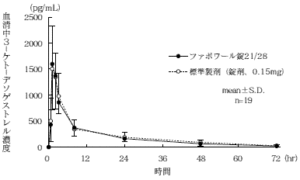
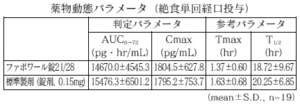
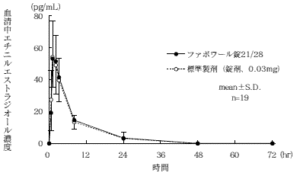
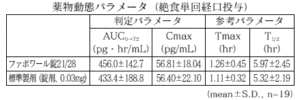
One tablet (desogestrel 0.15 mg, ethinyl estradiol 0.03 mg) of each of Faboir Tablets 21 and Faboir Tablets 28 and the standard preparation was orally administered in a single fasting dose to healthy adult women, and 3-keto-desogestrel in serum (desogestrel). As a result of measuring the concentration of the active metabolite) and the concentration of the unchanged form of ethinyl estradiol and performing statistical analysis on the obtained pharmacokinetic parameters (AUC, Cmax), the bioequivalence of the two agents was confirmed.
(1) 3-Keto-desogestrel (active metabolite of desogestrel)
(2) Ethinyl estradiol
* Parameters such as serum concentration and AUC, Cmax may differ depending on the test conditions such as the selection of the subject and the number and time of body fluid collection.
Physicochemical knowledge about active ingredients
- common name
Desogestrel
Chemical name
(+)-17α-Ethynyl-18-methyl-11-methylene-4-estren-17-ol
Structural formula
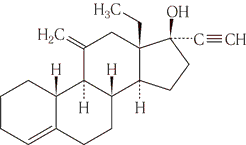
Molecular formula
C 22 H 30 O
Molecular weight
310.47
Properties
It is a white crystalline powder.
It is extremely soluble in tetrahydrofuran, soluble in N, N -dimethylacetamide or ethanol (99.5), slightly soluble in acetonitrile, and practically insoluble in water.
Melting point
110-112 ℃
- common name
Ethinylestradiol
Chemical name
19-Nor-17α-pregna-1,3,5 (10) -triene-20-yne-3,17-diol
Structural formula
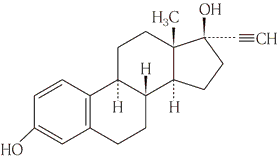
Molecular formula
C 20 H 24 O 2
Molecular weight
296.40
Properties
White to slightly yellow crystals or crystalline powder with no odor.
It is freely soluble in pyridine or tetrahydrofuran, slightly soluble in ethanol (95) or diethyl ether, and practically insoluble in water. Soluble in sodium hydroxide test solution.
Melting point
180-186 ° C or 142-146 ° C
Handling precautions
- Keep this drug out of the reach of children.
- ** Stability test
As a result of a long-term storage test (25 ± 2 ° C, relative humidity 60 ± 5%, 20 months) using the final packaged product, it was confirmed that it was stable for 20 months under normal market distribution.
Packaging
Faboir Tablets 21: 210 Tablets (PTP)
Faboir Tablets 28: 280 Tablets (PTP)
Main documents and document request destinations
Main literature
1) Fuji Pharma Co., Ltd. in-house material (bioequivalence test)
2) Fuji Pharma Co., Ltd. in-house materials (stability test)
Document request destination
Please also request the in-house materials listed in the main documents below.
Fuji Pharma Co., Ltd. Toyama Factory Academic Information Division
1515 Mizuhashi Tsujigado, Toyama City, Toyama Prefecture 939-3515
(TEL) 076-478-0032
(FAX) 076-478-0336
Name or address of manufacturer / distributor, etc.
Manufacturer and distributor
Fuji Pharma Co., Ltd.
1515 Mizuhashi Tsujigado, Toyama City, Toyama Prefecture