
About Norrevo Tablets
Emergency contraceptives used in the world (ingredient levonorgestrel)
Levonorgestrel was first made in the 1960s and began to be used as a contraceptive in the 1980s. It was officially commercialized in France as "NorLevo" in France in 1999, and has been officially approved in each country since then. It is one of the essential medicines of the World Health Organization and has become the most important medicine indispensable for the basic health system.
In Japan, it was approved as an emergency contraceptive drug Norrevo on February 23, 2011 . It is not sold as an over-the-counter drug, and on July 26, 2017, the conversion to an over-the-counter drug was considered at the "Evaluation Review Conference on Conversion from Medical Use to Guidance Required / General Use" by the Ministry of Health, Labor and Welfare. However, it was shelved as premature.
Norervo lock (Asuka)
Norrevo Tablets is an emergency contraceptive drug sold by Aska Pharmaceutical in April 2016.
This medicine is mainly taken when sexual intercourse is performed without contraception.
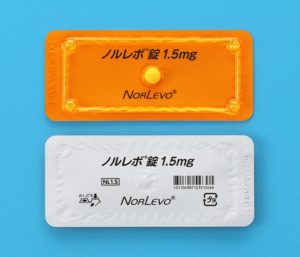
Usage / capacity
It is not a regular medication like pills. Take 1 tablet of 1.5 mg within 72 hours of sexual intercourse . (Take as soon as possible. Also , even if 72 hours have passed, the effect will be reduced, but it is effective.) It is a medicine like a pain reliever.
Main side effects
Headache, sleepiness, withdrawal bleeding, irregular uterine bleeding, nausea, malaise, dizziness, dizziness, anxiety, menorrhagia, delayed menstruation, lower abdominal pain, headache, breast pressure pain, etc.
About action and effect
1. Prevent the growth of the endometrium
Prevents implantation of the fertilized egg in the endometrium, and even if it becomes a fertilized egg, it prevents implantation in the endometrium by the action of the luteal hormone to prevent the growth of the endometrium and the function of preventing the rise in body temperature. increase.
2. Suppress ovulation
By suppressing ovulation by the action of progesterone, it works to prevent fertilized eggs from being produced even if contraception is not performed during sexual intercourse near the day of ovulation.